What Discord Taught Me About Offloading
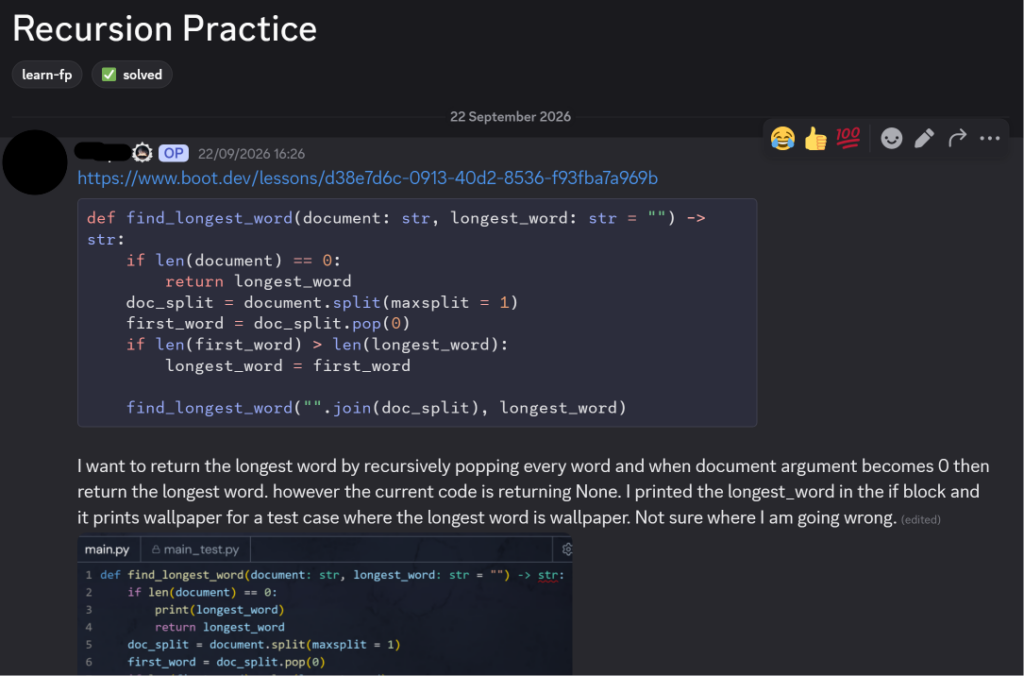
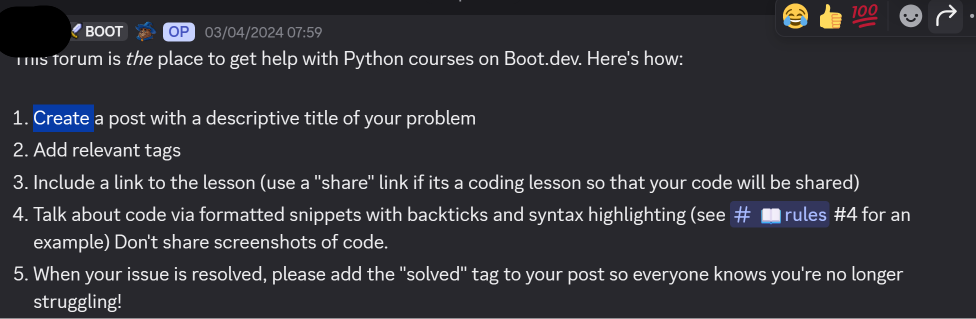
I was stuck on a coding exercise. My program kept giving me nothing back, even though I could see the right answer appear partway through. So I made a post in my course’s Discord help forum and followed the community’s quick support guide: a descriptive title, tags, a link to the lesson, my code, what I expected, and what I had already tried. I didn’t get it perfect the first time. I pasted a screenshot of my code, and the forum’s bot prompted me to repost it as formatted text.
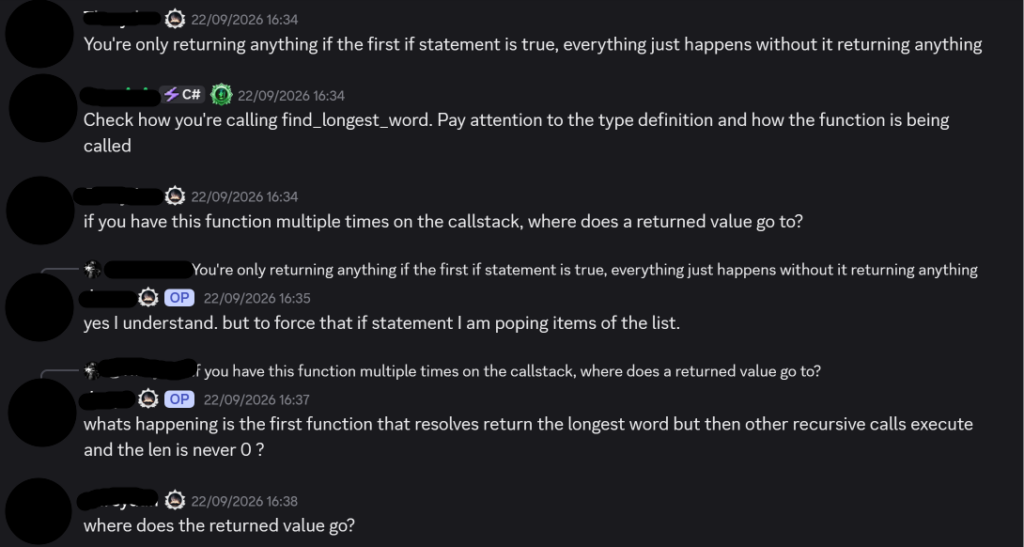
Two people replied within minutes, and neither gave me the fix. One pointed out that my program only handed back an answer in one situation. The other asked where an answer goes when the same piece of code is running several times at once. I first replied that I understood, but I didn’t. Then it clicked. Picture a chain of people passing a note. The last person writes the right answer, but if nobody passes it back up the chain, it never reaches the front. My program was finding the answer and losing it along the way. Once it worked, I marked the post solved.
The Interaction Design Foundation (2016) defines an affordance as a relationship between a user and an object, not a property of the object alone. Discord works the same way. The forum, code formatting, and reply feature (visible in my screenshots) make asking for help possible, but only if I know how to use them. The support guide teaches that, and the bot even nudged me when I got it wrong. Once my code was formatted text, the helpers could see my work and context straight away.
Risko and Gilbert (2016) describe cognitive offloading as using actions in the world to reduce mental work. Their example is tilting your head to read a rotated book instead of rotating it in your mind. Asking on Discord can work like that. I could have written “fix this” and copied the replies. But the helpers replied with questions, so the key step stayed with me. It was the same tool and the same features, but a very different outcome.
My “I understand” reply shows how easily I could have stopped early. If someone had just given me the fix, I’d have a working program and the same gap in how I picture the problem. How help is given seems to matter as much as whether it is given. This also similar to when using AI to do the learning for you instead of using it as a tutor.
I’d like to hear from you:
- When you’re stuck, how do you decide between asking for help and working it out yourself?
- What do you include in a help request to get a useful reply?
If you’ve had a good (or bad) experience asking for help online, share it in the comments.