Learning on YouTube: Who Decides What I Learn?
Platform Choice & Justification
I chose YouTube because it’s where I’ve learned almost every hobby skill I have.
YouTube counts as a social learning platform because the content is made by regular people, not just institutions. Anyone can upload a tutorial, viewers add tips and corrections in the comments, and creators make follow-up videos based on what people ask. Search, recommendations and Shorts decide which of those videos reach new learners.
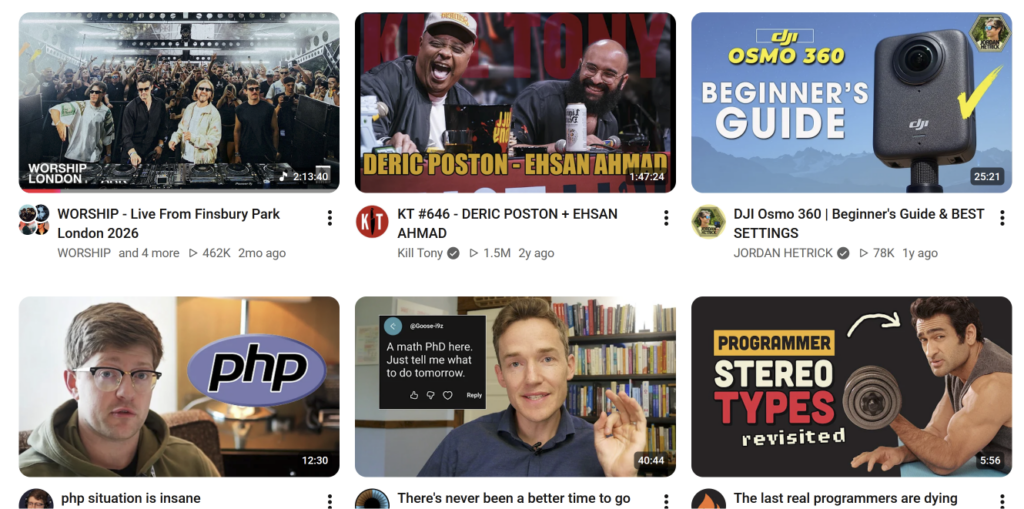
I learned beat matching and phrasing for DJing mostly from DJ Phil Harris, a YouTube channel with about 456K subscribers. Before I got my DJI Osmo 360, I watched setup guides. After that, I kept watching tutorials on editing 360 footage and colour grading so my reels would look better. I also watch golf swing breakdowns before going to the range.
I’ve never commented on any of these videos. I just watched, practiced and came back when I got stuck. That makes YouTube a good platform to look at honestly.

Analytical Framework
My framework is built on three elements of information: Agent, Message and Interpreter. its questions work for any content: who made it and why, what form it takes, and how the viewer reads it and acts on it. I added a fourth lens from Nguyen (2020) on epistemic bubbles, because a learning platform is also about what you never get shown.
| Criterion | Question I’m asking | Course concept |
|---|---|---|
| 1. Agent | Who makes the learning content, and what motivates them? | Agent questions: type of actor, motivation (financial, social, psychological) |
| 2. Message | What format does the content take, and how accurate or durable is it? | Message questions: durability, accuracy scale |
| 3. Interpreter | How do learners take in the content, and do they ever become agents themselves? | Interpreter: action taken, interpreter becomes the next agent |
| 4. Exposure | What does the platform leave out of my view, and can I get out of it? | Epistemic bubbles vs. echo chambers (Nguyen, 2020) |
The first three follow how content moves: someone makes it, it gets delivered a certain way, and someone interprets it. The fourth checks the system around all of it. A good learning platform should help learners find accurate content and see more than one side of a topic.
Platform Analysis
1. Agent: who’s teaching me?
YouTube’s biggest strength is that the teachers are practitioners. Phil Harris actually DJs. The people teaching colour grading actually edit video. That’s different from a textbook.
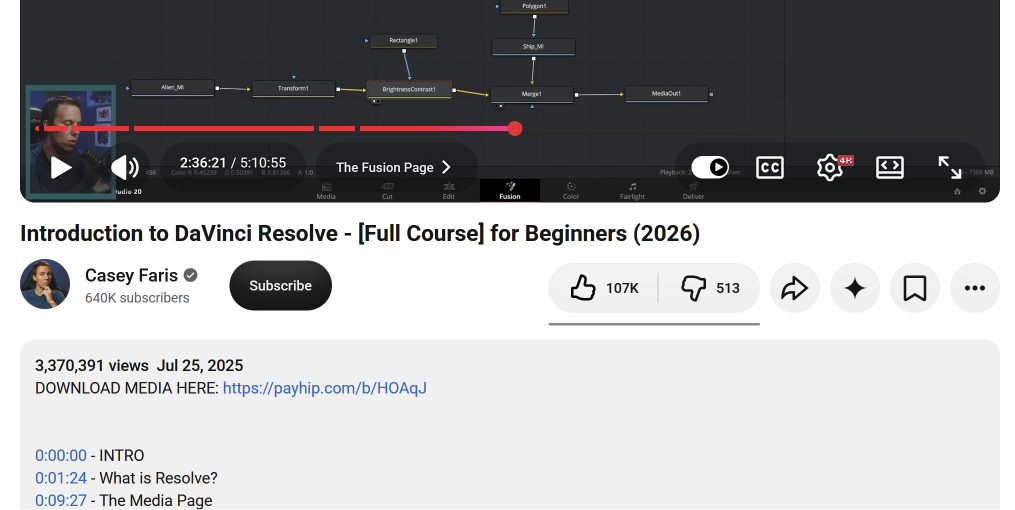
YouTube’s motivation is usually partly financial. Creators earn from ads and sponsors, so they need views. That doesn’t make them dishonest or learning concepts untrue, but it shapes what they make. A lot of the editing tutorials I watched ended up recommending a specific preset pack or plugin. The teaching was real, but so was the sales pitch. Like the Casey Faris’s 5 hour long video taught more than enough to make sick edits and start content creation. Real learning did happen and he pitched his advanced course for editing later.
2. Message: what form does the learning take?
On YouTube, the durable content is the long tutorials. Phil Harris’s videos on phrasing still make sense months later, and I can rewatch them while practicing.
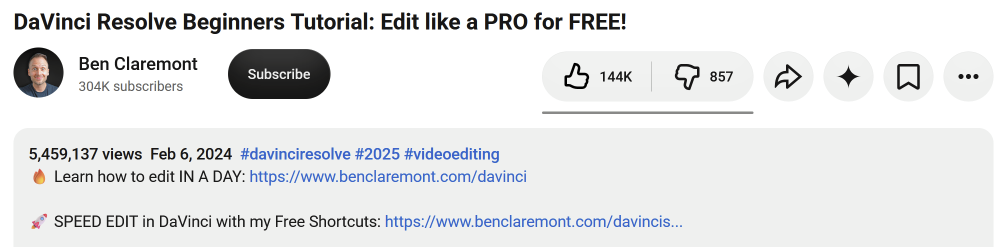
The short content is different. Shorts and clips like “fix your slice in one drill” or “pro colour grade in 30 seconds” are built for one quick moment. They’re usually not incorrect or necessarily teach the wrong drills. But some are close to what the report calls false connection, where the title or thumbnail promises more than the video delivers. A 30-second grade on someone else’s footage doesn’t teach me why the settings work on my Osmo 360 clips. Ben Claremont promised a quick 12 min tutorial but there was no tutorial just ad for his course. The number of views on this video is astonishing.
3. Interpreter: how do I actually learn from it?
The report says audiences are rarely passive. Each person reads a message through their own experience, and on social media the interpreter can become the next agent (Council Of Europe, 2017).
For learning, I was a pretty passive interpreter. I never commented or asked questions. I watched, tried it on my controller or in my editor, and came back when something didn’t work. That still worked for practical skills, because my own practice was the feedback loop. But I missed the social part of social learning. I never got corrected by anyone, and I never helped anyone else.
I did become an agent in a different way. I now post my own reels using what I learned about editing and grading. The skills moved from YouTube into my own content, even if the conversation didn’t.
4. Exposure: what was I not shown?
Nguyen (2020) separates two things. An epistemic bubble is when other voices are left out by accident, through omission. An echo chamber is when other voices are actively discredited, so you stop trusting them.
YouTube put me in an epistemic bubble, not an echo chamber. Once I watched a few quick DJ transition clips, my recommendations filled up with more short, flashy content. Slower videos on fundamentals like phrasing and song structure mostly stopped showing up. Nobody told me the basics were bad. They just disappeared from my feed.
The good news from Nguyen is that bubbles are easier to escape. You just need exposure to what was left out. That’s what happened when I went searching on purpose and found Phil Harris’s longer videos. The search bar got me out of the bubble that the recommendations built.
Reflection & Implications
My analysis shows that YouTube rewards learners who already know what to search for, and quietly narrows things for those who don’t.
The people who benefit most are self-directed learners, who can tell when a feed is getting shallow and go looking for depth. Creators benefit too, especially ones whose style fits short, fast content. The people at a disadvantage are total beginners, who don’t know what the fundamentals are yet and can’t tell what’s missing. People with slow internet or limited data, or who don’t speak English, also have fewer good options.
The design shapes how people learn. Because the feed rewards watch time, people get a lot of quick tips and fewer full explanations. Because commenting is optional, many learners stay passive like I did. The social part of the platform is there, but you have to choose to use it.
Using the Agent, Message and Interpreter questions changed how I watch. Now I ask why a creator made a video, whether it’s a quick clip or a real lesson, and what my feed might be leaving out.
These questions work on other platforms too. On Instagram, TikTok or even a course site, it’s worth asking who made the content, what format it’s in, and what you’re not being shown. A platform can teach you a lot, but it also decides part of what you learn.
References
Echo Chambers and Epistemic Bubbles (Nguyen, 2020)
Information disorder: Toward an interdisciplinary framework for research and policy making pp. 20 – 29 (Council of Europe, 2017)